Over the past few years, mental wellbeing has moved from the margins of workplace conversations to the centre. At least in theory.
In the GCC, and particularly in the UAE, I see a growing recognition that employee wellbeing is no longer a “nice to have”. Governments are putting frameworks in place, organisations are launching initiatives, and leaders are increasingly aware that performance and wellbeing are deeply connected.
But recognition is not the same as integration. And that gap between intention and lived experience is where the real challenge sits.
Different speeds, same challenge
Across the region, the approach to mental wellbeing varies in pace and maturity.
In the UAE, wellbeing has been on the national agenda for nearly a decade. Initiatives such as the National Program for Happiness & Wellbeing and the National Strategy for Wellbeing 2031 have helped legitimise the conversation. They introduced roles, metrics and public frameworks that signalled: this matters.
And yet, inside many organisations, wellbeing strategies are still fragmented. Policies exist, but daily reality doesn’t always reflect them. Some employers are taking meaningful steps, grounding wellbeing initiatives in data, feedback and leadership commitment, but many are still searching for how to translate ambition into practice.
Saudi Arabia, on the other hand, is at an earlier but rapidly accelerating stage. Vision 2030 has placed human capital firmly on the agenda, and wellbeing is gradually finding its place within that transformation. Traditionally, workplace wellbeing focused on physical health and safety. Today, leading organisations are beginning to explore more holistic approaches, often driven by multinational exposure and younger talent pushing the conversation forward.
Different speeds, but a shared question: How do we move from symbolic gestures to something people actually feel?
Why certificates don’t retain talent
Government-backed wellbeing frameworks and certifications can play a positive role. They raise awareness, create momentum and help organisations signal intent, especially to younger, purpose-driven candidates.
But when it comes to retention, certificates rarely do the heavy lifting. In high-pressure sectors such as tech, energy and finance, people don’t stay because of a logo on a website. They stay because of meaningful work, psychological safety and leadership they trust.
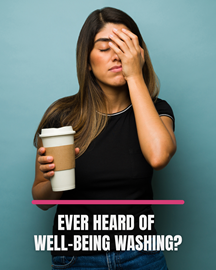
This is where the global phenomenon of wellbeing washing becomes relevant. Across markets, employees are increasingly sceptical of surface-level initiatives that don’t address deeper structural issues. Wellness days, glossy social posts or beautifully designed offices can feel hollow when workloads are unrealistic, dynamics are toxic, or trust is low.
Wellbeing that isn’t embedded quickly loses credibility.
Design, branding or ESG? Yes, but only if aligned
In the Gulf, workplace design innovations are often positioned as a mix of:
- employer branding
- talent attraction
- ESG commitments
And in theory, they can support all three.
But the most forward-thinking organisations treat workplace design as a retention and engagement lever, not just a visual statement. Physical environments matter, but only when they are aligned with leadership behaviour, flexibility and trust.
Design might get people through the door. It won’t keep them there.
Mental health, culture and the courage to talk about it
Mental health remains a sensitive topic in many Gulf workplaces. Compared to Europe or the U.S., conversations are often indirect, framed under broader wellbeing or engagement umbrellas.
That said, the landscape is shifting.
With Gen Z entering the workforce, expectations are changing fast. This generation is more vocal about mental health, more attuned to emotional intelligence, and far less impressed by superficial perks. They are looking for psychological safety, flexibility and environments where care is genuine, not performative.
Balancing cultural sensitivity with openness requires a dual approach:
- respecting local norms
- while creating safe, confidential spaces for support and dialogue
Tools like Employee Assistance Programs can help. But only if they are backed by trust, leadership support and a culture that encourages their use. Without that, even the best resources remain unused.